How to Choose the Right Couples Intimacy Retreat (and Why Most Couples Choose the Wrong One)
A 2026 Guide to Couples Intimacy Retreats in the U.S. and Beyond
Xanet's new book is now available! The Sex & Intimacy Repair Kit — Click here to order your copy

A 2026 Guide to Couples Intimacy Retreats in the U.S. and Beyond
If you’re considering a couples intimacy retreat, you’ve likely realized there are many different approaches—and not all of them create the same kind of results.
The most effective retreats don’t just create connection in the moment—they help you rebuild emotional safety, physical intimacy, and real-time connection in a way that lasts.
If you’re looking for a curated list of top retreats, you can explore that here.
They come because something feels… off.
You’re still functioning as a couple, but the emotional connection isn’t as easy as it once was, and the physical intimacy feels complicated—or absent. Somewhere along the way, you may have started feeling more like roommates than lovers.
At that point, a retreat can be one of the most powerful ways to reset your relationship.
But not all intimacy retreats are designed to create real, lasting change.
Many retreats offer beautiful settings and meaningful conversations, but without real-time practice and integration, it’s common for couples to fall back into old patterns once they return home.
Not because you did anything wrong—but because many retreats rely primarily on insight rather than experience.
They often focus on:
Real intimacy doesn’t shift through conversation alone.
You can’t talk your way into better sex and intimacy—you have to feel your way into it.
Not all retreats are created equal, and understanding the differences can help you choose one that truly meets your needs.
These are typically led by licensed therapists and focus on communication, conflict resolution, and relationship patterns. They can be incredibly valuable for gaining insight into what’s happening in your relationship.
At the same time, they often stay in the realm of conversation, without fully addressing the emotional and physical disconnection many couples are experiencing.
These retreats focus more directly on erotic energy, polarity, and expanding your experience of pleasure and connection. For many couples, this can be a powerful doorway—especially when it comes to awakening desire and bringing a sense of aliveness back into the relationship.
These experiences tend to be most impactful when grounded in emotional safety and trust. Without that foundation, it can be difficult to fully integrate what you’ve opened once you return home.
In my own work, I draw from many of these principles—particularly presence, embodiment, and conscious touch—while also integrating a strong focus on emotional connection and nervous system safety so that the experience can truly land.
These retreats are often held in beautiful, thoughtfully curated environments designed to help you step away from daily life and reconnect.
For many couples, simply having uninterrupted time together—without the demands of work, family, or routine—can create meaningful shifts. The setting itself plays a powerful role. Being in nature, slowing down, and allowing your nervous system to settle often makes connection feel more accessible.
The depth of transformation, however, depends on how much intentional support is woven into the experience.
In my retreats, I intentionally combine this immersive environment with guided, experiential work—so you’re not only reconnecting because you’ve stepped away, but learning how to reconnect in a way that carries back into your life.
While each of the above approaches can be valuable, many couples find themselves wanting something that integrates emotional connection, physical intimacy, and real-time experience.
These experiential retreats focus on real-time, guided experiences that help you reconnect emotionally and physically—not just talk about it.
Rather than staying in conversation alone, the work happens in the moment—through the body, through presence, and through direct interaction with your partner.
This often includes:
What makes this approach different is that it integrates emotional connection, physical intimacy, and environment rather than separating them.
You might be in a beautiful, restorative setting or exploring elements of embodied connection, but everything is grounded in attunement and nervous system safety.
This is often where couples experience the kind of shift that doesn’t just feel good in the moment—but actually changes how they relate to each other moving forward.
If you’re considering a retreat, the most important question isn’t “Which one is the best?” but rather:
What does our relationship actually need right now?
You might reflect on:
Some retreats are rooted in specific religious or spiritual frameworks, which can be meaningful for couples who share those values. For others, a more experiential, body-based, or secular approach may feel like a better fit.
If you’re navigating deeper disconnection or a sexless relationship, you can explore that more fully here
Both private and group retreats can be deeply transformative, but they offer different experiences.

A private retreat offers a fully customized experience focused entirely on your relationship, allowing for a deeper dive into your specific dynamic with flexibility in pace and structure.
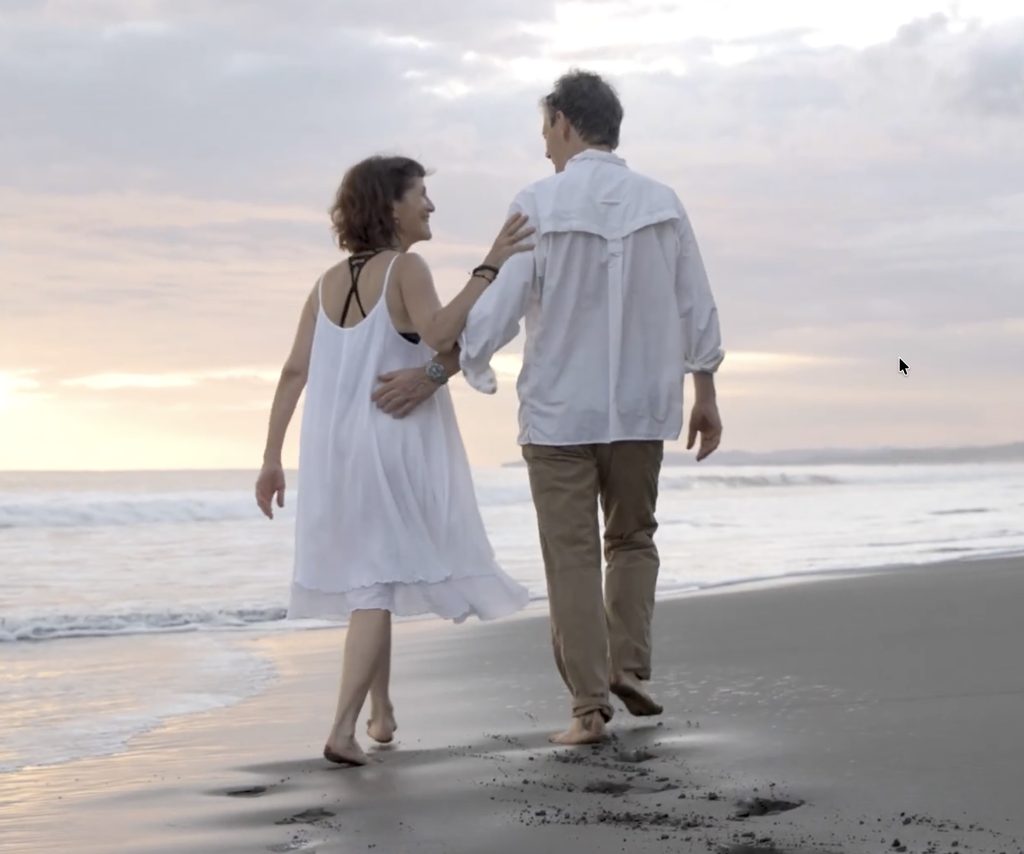
A group retreat offers a blend of guided experiences and spacious integration time, along with the opportunity to learn alongside other couples.
Set in a luxury, nature-based environment, these retreats allow your nervous system to settle, making it easier to reconnect in a way that feels both natural and supported.
For many couples, stepping out of daily life and into a different environment creates the conditions for connection to return more organically.
A retreat can be especially powerful if you feel disconnected, caught in repetitive patterns, or unsure how to bridge the gap between you—even though you both want to reconnect.
It works best when both partners are open and willing to engage in the process.
If there is ongoing high conflict, unwillingness from one partner, or active issues that require specialized support, a more individualized or therapeutic approach may be a better place to begin.
In my work with couples over the past 15+ years, I’ve seen that lasting change comes from experience—not just insight.
From slowing down enough to feel what’s happening between you.
From learning how to be present with each other again.
From rebuilding connection in a way that feels natural and sustainable.
For some couples, that looks like a private retreat in Asheville, offering focused, one-on-one support.
For others, it’s a luxury group retreat in Costa Rica, where the beauty, spaciousness, and slower pace of life create the conditions for deeper connection to emerge.
Both offer powerful pathways—the key is choosing the one that aligns with where you are right now.
When couples begin to reconnect in this way, the shifts are often profound.
Communication softens.
Touch feels natural again.
Desire begins to return—without pressure.
And the relationship starts to feel alive again, often in ways couples haven’t experienced in years.
Not because something was “fixed,” but because you found your way back to each other.
Start by getting clear on what your relationship truly needs.
From there, you can explore your next step:
Or, if it feels right, schedule a conversation to talk through what would best support you.
A couples intimacy retreat is an immersive experience designed to help partners reconnect emotionally and physically through guided practices, coaching, and time away from daily life.
No. Many couples attend because they want to deepen connection, not just fix something. It’s common to feel “fine on the surface” but still want more intimacy, desire, or emotional closeness.
Private retreats are fully customized and focused on your specific relationship. Group retreats offer shared learning, spacious integration time, and a more immersive, community-based experience.
Yes—this is one of the most common reasons couples attend. When emotional and physical connection has faded, guided, experiential work can help rebuild that bridge.
If both partners are willing to show up, be honest, and engage in the process, that’s usually enough to begin.