Why Intimacy Fades in Long Term Relationships (New Research from 300,000 Couples Reveals)

Why Intimacy Fades in Long Term Relationships (and How to Reconnect)?
If you’ve been in a long-term relationship, you may have asked yourself at some point:
Where did the intimacy go?
Many couples I work with still love each other deeply. They respect each other. They’ve built a life together.
And yet something essential feels missing.
The emotional connection isn’t what it once was.
Sex happens less often—or not at all.
Attempts to talk about it sometimes lead to frustration or silence.
It’s easy to assume something is wrong with the relationship.
But new research suggests something different may actually be happening.
A recent report from Arya.FYI analyzed data from more than 300,000 responses, making it one of the largest modern datasets examining emotional and sexual intimacy in relationships.
And the findings are fascinating.
They suggest that intimacy isn’t disappearing in modern relationships.
It’s evolving.
What the 2026 State of Intimacy Report Reveals
The 2026 State of Intimacy Report from Arya examined how couples experience emotional closeness, desire, and connection.
Drawing on more than 300,000 survey responses, the report provides a rare look at what actually strengthens—or weakens—intimacy in real relationships.
One of the most striking findings?
71% of couples said they prioritize emotional closeness and breaking routine over purely adventurous sexual experiences.
In other words, couples aren’t necessarily seeking more intensity.
They’re seeking more connection.
The research also showed:
• 61% of partners who initially felt emotionally distant reported increased closeness after engaging in guided connection experiences.
• 40% of participants reported increased emotional and sexual satisfaction after using conversation prompts, relationship education tools, or curated experiences designed to spark connection.
• Women’s sexual satisfaction increased at twice the rate of men’s when couples engaged in structured intimacy practices.
• Men’s participation in intimacy programs increased from 40% to 45%, suggesting growing interest among men in relationship growth.
Taken together, these statistics paint a hopeful picture.
The problem in many relationships isn’t that couples don’t want intimacy.
It’s that many couples were never taught how to nurture it intentionally.
Why Intimacy Fades in Long Term Relationships
In my work with couples, the patterns described in the Arya research appear again and again.
This is how a sexless marriage begins
Most couples don’t lose intimacy overnight.
It fades slowly through a combination of emotional and relational dynamics.
Emotional Disconnection
Emotional intimacy is the foundation of sexual connection.
When partners stop feeling seen, heard, or emotionally supported, desire naturally declines.
Often this happens through hundreds of small moments:
-
conversations that feel distracted or rushed
-
unresolved conflict that quietly builds resentment
-
feeling misunderstood or criticized
Over time, emotional distance grows.
And when emotional intimacy fades, sexual intimacy often follows.
One Partner Becomes Responsible for Intimacy
Another pattern that damages connection is when one partner becomes responsible for initiating intimacy.
When this happens:
The initiating partner often feels rejected or discouraged.
The other partner may feel pressured or overwhelmed.
Neither dynamic supports desire or connection.
Healthy relationships tend to develop shared ownership of intimacy.
Couples Stop Talking About Sex
Perhaps the most common barrier to intimacy is also the simplest.
Couples stop talking about sex.
Many people grew up in cultures where sexuality was surrounded by shame or silence.
As a result, even loving partners often struggle to discuss:
• what they want
• what they enjoy
• what they wish were different
Without open communication, curiosity disappears—and intimacy gradually fades.
What Actually Helps Couples Rebuild Intimacy
One of the most encouraging findings in the Arya report is that intimacy responds quickly to intentional effort.
Couples who introduced simple practices—like guided conversations or shared experiences—reported measurable improvements in connection.
That mirrors what I see in my own work.
Intimacy isn’t something couples either “have” or “don’t have.”
It’s something that grows through attention, curiosity, and relational skills.
When couples begin rebuilding emotional intimacy, several things often shift:
Partners feel safer sharing vulnerable thoughts.
Communication becomes more open and less defensive.
Physical connection begins to return naturally.
Sex improves not because couples force it—but because desire thrives in environments of safety and emotional closeness.
A New Way of Thinking About Intimacy
In my upcoming book, The Sex & Intimacy Repair Kit, I describe what I call intentional intimacy.
Instead of hoping passion magically returns, couples learn how to actively nurture connection.
That can include:
• emotionally attuned listening
• structured conversations that deepen connection
• repairing conflict in healthier ways
• creating new rituals of intimacy and sensuality
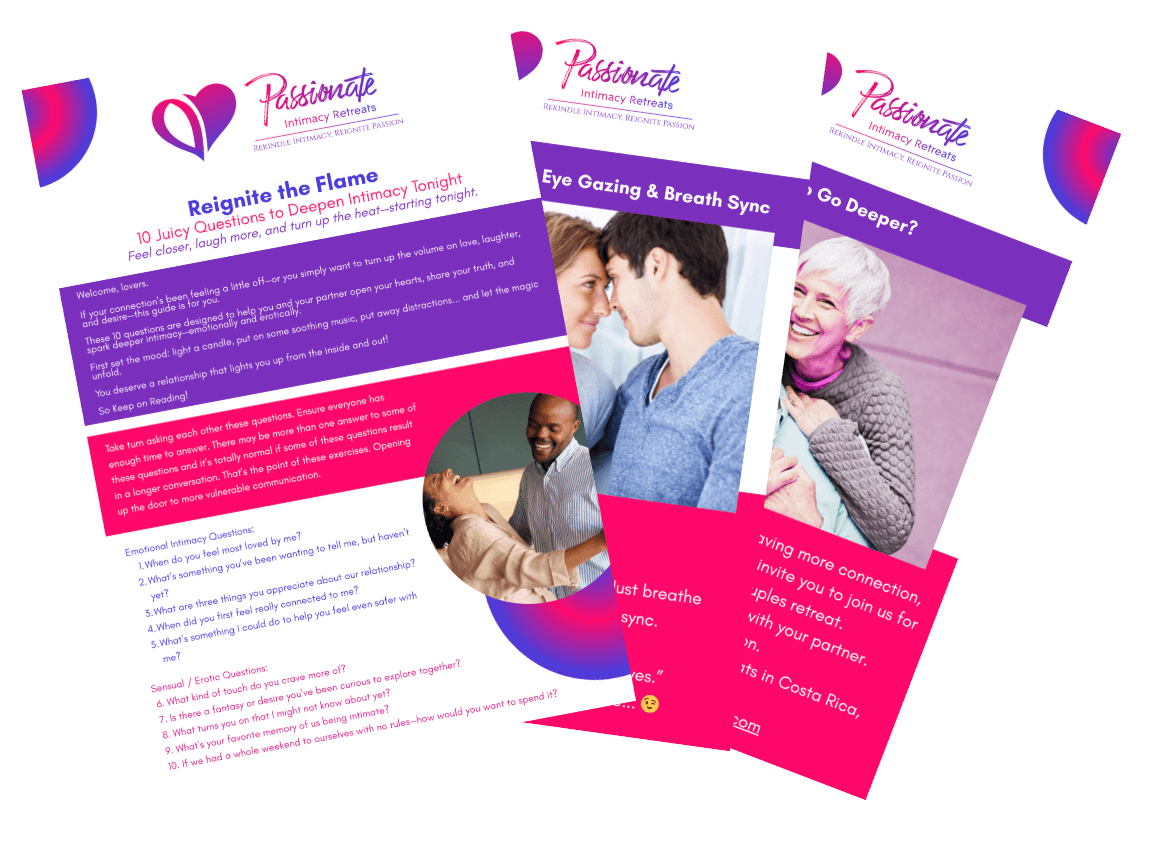
These are the same practices we explore in my couples intimacy retreats, where many partners experience dramatic shifts in connection in just a few days.
Not because their relationship was broken.
But because they finally learned the tools to rebuild intimacy together.
The Future of Intimacy
The most hopeful message from the 2026 State of Intimacy Report is this:
Modern couples are not giving up on intimacy.
If anything, they are seeking deeper connection than previous generations often had language for.
They want relationships that feel:
• emotionally safe
• erotically alive
• authentically connected
And the good news is that those relationships are absolutely possible.
Because intimacy isn’t something that just happens.
It’s something couples create together over time.
Want to Rebuild Intimacy in Your Relationship?
If intimacy has faded in your relationship, you’re not alone.
Many couples go through seasons where connection feels distant.
But distance doesn’t mean the relationship is broken.
Often couples simply need new tools and new conversations.
You can start by exploring:
• my upcoming book The Sex & Intimacy Repair Kit
• immersive couples intimacy retreats designed to rebuild connection
• or the many resources available here on the blog
Because intimacy doesn’t have to fade with time.
With the right support and skills, it can actually become deeper and more fulfilling than ever.