Why Women Lose Desire in Long Term Relationships

So many women struggle with lack of desire. It’s one of the most common reasons that couples end up in a sexless relationship.
I know how real this struggle feels because I lived it for 26 years during which sex was painful and disappointing, and I eventually shut down. But everything shifted the night I met someone who introduced me to tantra. And overtime I learned an important truth: sexual desire doesn’t disappear but it will fade if the correct elements in the relationship are not in place.
Desire Doesn’t Usually Disappear Overnight
One of the biggest misconceptions about women’s desire is that it suddenly “vanishes.”
In reality, desire often fades gradually over time through layers of stress, exhaustion, emotional disconnection, resentment, routine, pressure, and nervous system overload.
I’ve worked with many women who initially blamed themselves for their loss of desire, believing something was “wrong” with them physically or hormonally.
But when we look more deeply, we often discover that their bodies have simply stopped responding to chronic stress, emotional disconnection, burnout, or years of prioritizing everyone else’s needs above their own.
Many women spend their days:
- caregiving
- managing households
- carrying emotional labor
- working demanding jobs
- parenting
- navigating relationship tension
- feeling touched out or depleted
Then at the end of the day, they’re expected to suddenly shift into feeling relaxed, open, sensual, and sexually available.
For many women, that’s simply not how desire works.
Desire needs space.
It needs emotional safety.
It needs presence.
It needs a nervous system that feels regulated enough to receive pleasure rather than remain stuck in stress or survival mode.
This is one reason why so many women in long-term relationships believe they’ve “lost” their libido, when in reality they’ve lost connection with themselves, their bodies, and their sense of aliveness.
Emotional Safety is Necessary to Feel Desire
Sex is one of the most vulnerable acts we engage in. Without emotional safety, women’s desire shuts down quickly. Safety isn’t about never arguing, it’s about knowing you can bring your feelings, fears, and needs to the table without being judged or dismissed.
When couples build safety, intimacy blossoms. Partners can support this by listening without trying to fix, acknowledging feelings, and creating space for vulnerability.
Women are Preprogrammed to Say No
Most women grow up with messages that sex is something to avoid, to fear, or to endure. Rarely do we hear, “Sex is for your pleasure.” That cultural programming makes it hard to feel excited about intimacy as an adult.
Partners can begin to shift this by approaching sex with curiosity instead of obligation. Ask, “What feels good for you right now?” or “Is there something you’ve wanted to try but haven’t asked for?”
Sex That Doesn’t Work for Her Body
One of the biggest reasons women lose desire is simply because they’re not having satisfying sex. Many women are penetrated before they’re ready, which leaves them uncomfortable or disconnected. Female arousal takes time, often 30 to 45 minutes of touch, kissing, and buildup before the body is truly ready.
When sex is rushed or reduced to intercourse, desire naturally fades. To change this, couples need to slow down, prioritize foreplay, and create space for pleasure rather than performance.
Shame and the Sexual Blueprint
Every woman carries a sexual blueprint made up of the messages, experiences, and judgments she’s received since childhood. These shape how she views her own body, what she believes is “allowed,” and what feels safe to ask for.
As I often tell my clients, the very first step is to learn your sexual blueprint. This is something I guide couples through during my retreats. Understanding how the messages you received around sex impact your relationship with sex as an adult, and learning how to shift those false belief.
Not Knowing What to Ask For
Many women lose desire because sex has become repetitive. Women crave novelty and variety, but often don’t know what they want or feel too afraid to ask. The result? Boredom, silence, and disconnection.
In my couples work, we explore erotic blueprints, the styles of sex you enjoy and how they impact your arousal pathway. When you have guidance and language around the type of touch and interaction you want, sexual desire finds its way back.
Many Women Experience Responsive — Not Spontaneous — Desire
Another important thing to understand is that many women do not experience desire in the spontaneous way we often see portrayed in movies or media.
Spontaneous desire is the feeling of simply being “in the mood” out of nowhere.
Responsive desire works differently.
For many women, desire emerges after emotional connection, affection, relaxation, safety, playfulness, touch, or sensual engagement has already begun.
In other words, many women don’t start out feeling desire.
They begin feeling desire in response to feeling emotionally connected, present, relaxed, and turned on through experience.
This distinction is incredibly important because many women wrongly assume something is broken when they no longer feel spontaneous sexual desire the way they once did earlier in a relationship.
But often, nothing is wrong at all.
Their desire simply requires different conditions to emerge.
Obligation and Pressure Shuts Down Desire
Unfortunately, many couples unknowingly create pressure around intimacy, which can further shut desire down.
When sex becomes associated with obligation, performance, tension, disappointment, or fear of letting a partner down, the nervous system often responds protectively by withdrawing from desire altogether.
This is why emotional intimacy, communication, affection, novelty, and nervous system safety are so essential in long-term relationships.
Healthy desire is rarely something we can force.
It’s something we create space for.
When women lose interest in sex, it’s rarely because something is inherently “wrong” with them.
More often, desire gets shut down by chronic stress, emotional disconnection, lack of safety, resentment, cultural conditioning, shame, pressure, routine, or years of putting everyone else’s needs ahead of their own.
Bringing it all together
The good news is that these patterns can change.
When women feel emotionally safe, connected to their bodies, supported, seen, and free from pressure, desire often begins to re-emerge naturally.
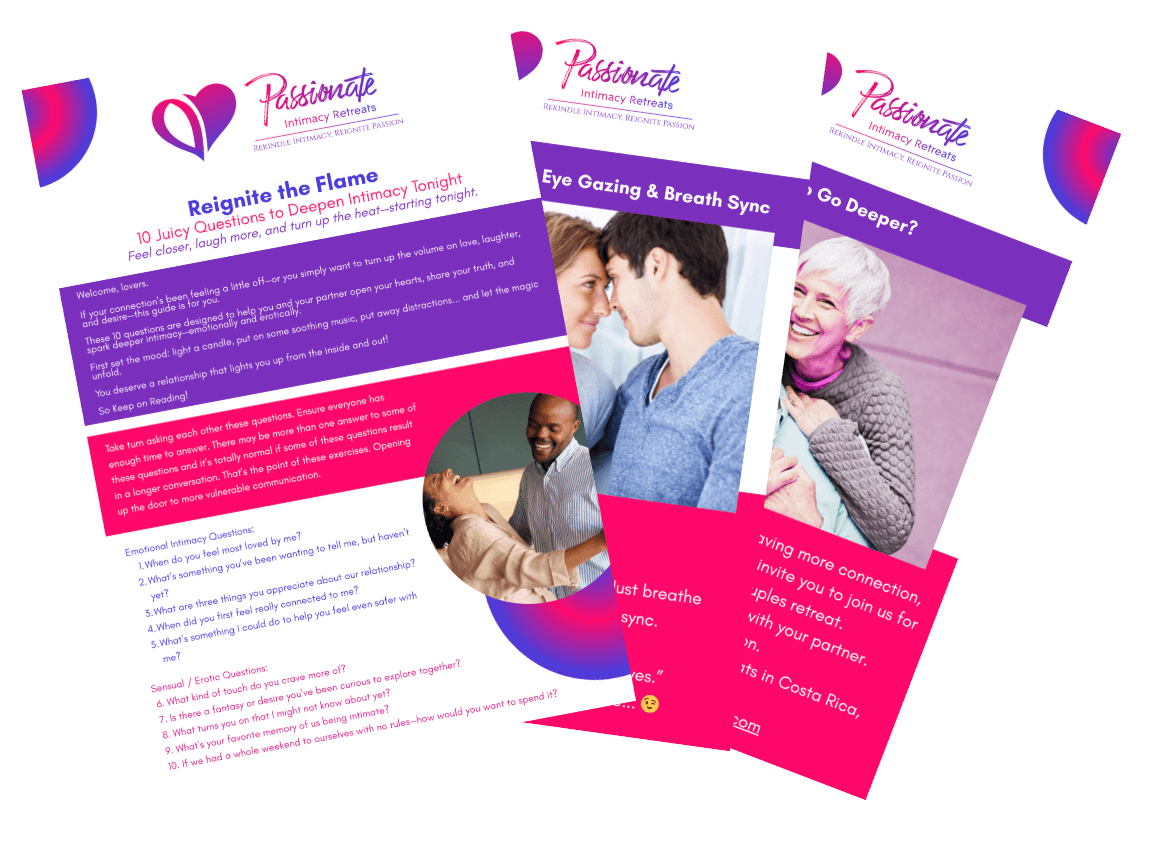
This is the work I do with couples through private coaching, immersive retreats, and experiential intimacy work designed to help partners slow down, reconnect emotionally, and rediscover intimacy in a deeper and more authentic way.
Whether through a private retreat in Asheville, North Carolina, or one of our Costa Rica couples retreats, these experiences create space for couples to step outside the stress and routines of daily life and begin reconnecting emotionally, physically, and sensually.
Because women don’t lose desire forever.
Often, desire is simply waiting for the right conditions to return.
And when couples learn how to rebuild emotional connection, safety, playfulness, and intimacy together, relationships can become more connected, passionate, and fulfilling than ever before.
If this resonates with you, I invite you to explore my couples intimacy retreats, coaching programs, and additional resources for rebuilding connection and desire in long-term relationships.